

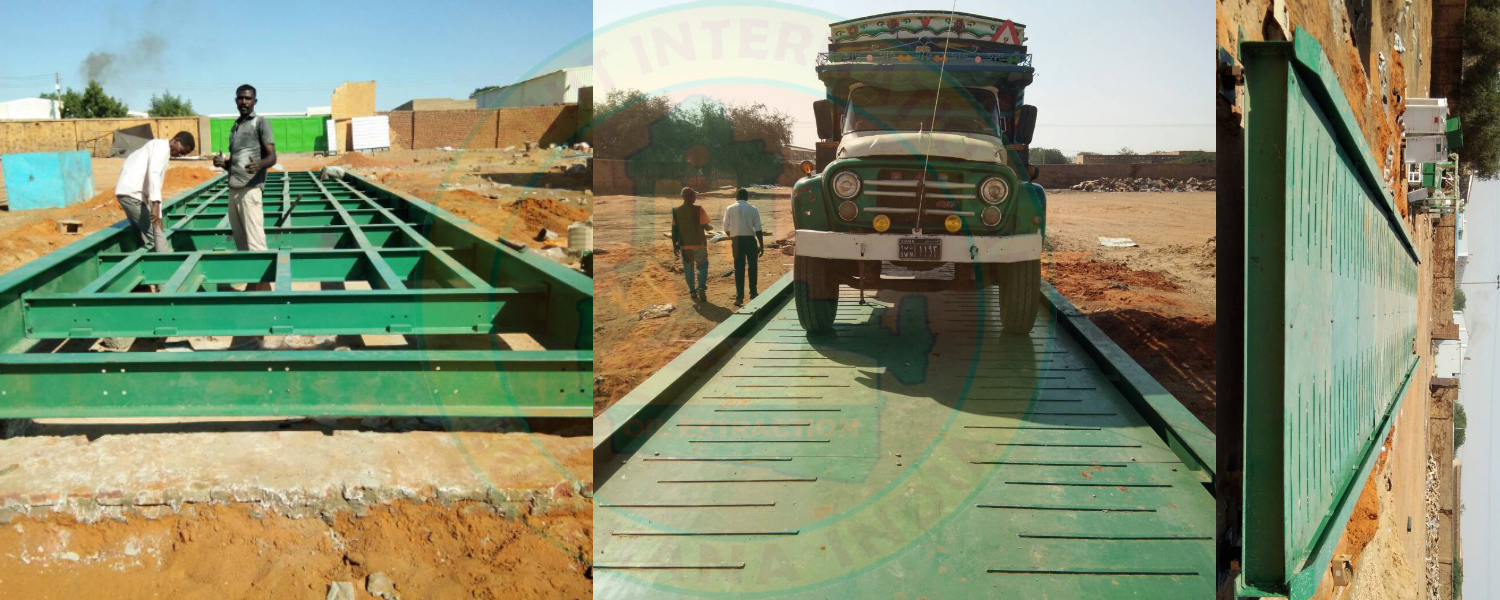
Weighbridge: Description, Working, and Applications
A weighbridge, also known as a truck scale, is a large industrial scale specifically designed to weigh heavy-duty vehicles, including trucks and trailers, both with and without loads. It plays a critical role in industries such as agriculture, logistics, construction, mining, manufacturing, and oil milling by providing accurate weight measurements of incoming and outgoing goods. Accurate weighing ensures operational efficiency, proper inventory management, compliance with legal weight limits, and fair trading practices.
What is a Weighbridge?
A weighbridge is a fixed platform mounted with load cells (electronic sensors) that measure the weight of vehicles when they drive onto the platform. It provides a simple yet highly effective way to measure bulk materials transported in trucks. The total load is recorded, and by subtracting the tare weight (empty vehicle weight), the net weight of the material can be calculated.
Key Components of a Weighbridge
- Platform: The surface on which the vehicle rests during weighing. Made of heavy-duty steel or concrete to withstand loads and weather conditions.
- Load Cells: Precision sensors placed under the platform that detect weight by converting mechanical force into electrical signals.
- Junction Box: Connects all load cells and ensures the signal is balanced before being transmitted to the indicator.
- Weighing Terminal (Indicator): Displays the weight readings and can be connected to printers, computers, and software systems.
- Software System: Used for data recording, vehicle tracking, report generation, and integration with ERP systems.
- Ramp (optional): For above-ground weighbridges, ramps are used to allow vehicle entry and exit onto the platform.
Types of Weighbridges
Depending on the site conditions, space availability, and operational needs, various types of weighbridges are available:
1. Pit Type Weighbridge
In this type, the platform is installed at ground level, and the entire mechanism is placed in a pit. It requires less surface area and is suitable for sites with limited space or high vehicle flow. Cleaning and drainage are essential for smooth operation.
2. Pitless or Surface-Mounted Weighbridge
The platform is mounted above ground, with ramps provided for access. This type is easy to install and maintain but requires more surface area. It is ideal for temporary or semi-permanent installations.
3. Portable Weighbridge
Designed for mobile or temporary sites such as construction zones or remote areas. These weighbridges are modular, easy to relocate, and can be set up quickly on compacted earth or concrete pads.
4. Axle Weighbridge
Measures individual axle weights and calculates total weight by summing them. These are compact and cost-effective but may be less accurate than full-length weighbridges.
Working Principle of a Weighbridge
The operation of a weighbridge is based on load cell technology. When a vehicle drives onto the platform, its weight exerts a force on the load cells installed beneath. These load cells convert the mechanical pressure into electrical signals proportional to the weight. The signals are processed by the weighing terminal, which displays the weight and records it digitally.
The weighing process involves two main steps:
- Gross Weighing: The vehicle with its load is weighed to determine the total or gross weight.
- Tare Weighing: After unloading, the empty vehicle is weighed to get the tare weight.
Subtracting the tare weight from the gross weight gives the net weight of the load carried.
Applications of Weighbridges
Weighbridges are essential across a variety of sectors:
- Agriculture: Weighing trucks carrying grains, pulses, oilseeds, and fertilizers for accurate trade and storage.
- Oil Mills: Measuring incoming raw materials (like oilseeds) and outgoing products (oil, cake, meal) for inventory control and billing.
- Logistics: Ensuring proper load management and preventing overloading fines.
- Mining: Weighing minerals, ores, and construction materials at extraction and dispatch points.
- Manufacturing: Monitoring raw material input and finished goods output.
- Waste Management: Tracking waste disposal loads entering and exiting facilities.
Benefits of Using a Weighbridge
- Accurate Measurement: Ensures fair trade and inventory accountability.
- Operational Efficiency: Speeds up the inbound and outbound logistics process.
- Data Management: Integrated software enables tracking, reporting, and analytics for better decision-making.
- Legal Compliance: Helps in adhering to government regulations on vehicle loading.
- Cost Savings: Reduces losses due to inaccurate weighing or manual errors.
- Durability: Built to handle rough environments and heavy-duty vehicles.
Automation and Integration
Modern weighbridges come with advanced features like:
- RFID card systems for vehicle identification
- ANPR (Automatic Number Plate Recognition) cameras
- Boom barriers and traffic lights for entry control
- Remote monitoring and cloud data access
- ERP and SAP integration for real-time data exchange
These features reduce manual dependency, enhance security, and improve throughput by automating the entire weighing and access control process.
Maintenance and Calibration
For consistent performance, regular calibration and maintenance are essential. Our weighbridges are designed for easy inspection and service access. We provide annual maintenance contracts (AMCs), certified calibration services, and on-call technical support to ensure your equipment remains accurate and compliant at all times.
Conclusion
A weighbridge is a crucial investment for any business dealing with bulk material movement. It not only ensures weight accuracy but also contributes to transparency, safety, and profitability. With options ranging from pit-type and surface-mounted to portable and automated systems, our weighbridges are designed to meet the diverse needs of industries large and small. Whether you're running an oil mill, logistics hub, or mining site, our robust and reliable weighing solutions can help you streamline operations, maintain compliance, and enhance efficiency.


